Is all debt bad? Should I clear all debt with credit clearance?
Debt is usually considered to be a bad thing. Financial specialists, credit clearance specialists, professors, financial gurus and anyone dealing with personal finance will recommend against the use of any type of debt. They lecture and recommend, you settle all credit cards, pay off your home loan and to use every single cent available to settle outstanding debt. All the above is bad debt.
There is certainly a justifiable argument that if you don’t have any debt then you will be financially more stable but the one way most consumers can afford to buy homes and cars is through borrowing money and therefore making debt. Although it may be simple to distinguish whether a debt is bad it often takes a deeper investigation of certain conditions to determine whether a debt is indeed bad.
In most instances these financial specialists, professors, financial gurus are correct, but debt is a financial instrument, for example, a hammer is an instrument. A hammer can cause a lot of harm and damage if not used in a responsible manner and the same is with the use of debt if you don’t handle it in a responsible manner.
Intelligent real estate investors get excited to accumulate more debt when it comes to purchasing properties to grow their inherent wealth. Good debt makes you money by investing in income-generating assets which will increase your capital gains.
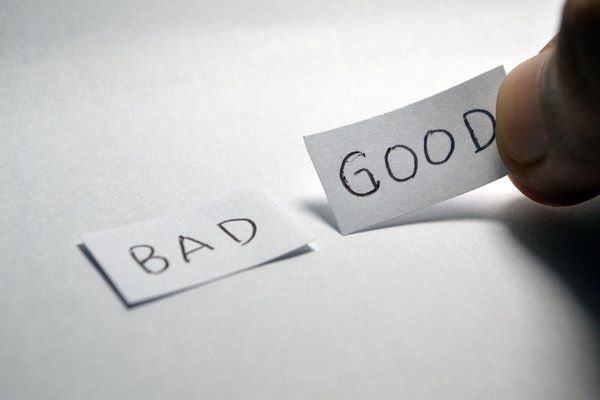
There's a real distinction between good and bad debt.
Bad debt in most instances gets used to buy items that will not produce any money for you in the long run.
A simple rule is that if your net value or future value is increased when you access this debt, the debt is then regarded as good debt. It's bad debt if it doesn't and you have no money to pay it for.
Although the majority of debt available to consumers like personal loans, revolving loans, vehicle finance, credit cards, one-month loans (loan sharks) falls into the category of bad debt, this is not because of the usually high-interest rate but because these types of debt create little to no revenue.
For example, a home loan or building finance to buy an apartment complex that will generate a passive income of 15-25% a year is good debt. If you lucky and plan, the loan will be ‘free’ if the money required for the monthly repayment gets paid by the investment themselves. Example, a tenant renting your property is covering the home loan repayment for you.
Take this into consideration: If you had to wait or save the money to buy that house or apartment block in cash, most average consumers would not have enough time in their lives to save for such a highly-priced property. The only way to get access to income-generating assets is to finance high priced assets through bank finance.
Experienced investors are aware that there will be security to pay off the finance with someone else’s money (the tenant) as the tenant will provide the monthly cash flow to cover the repayments.
Investing without debt is like cooking on a gas stove without any gas, the gas may be hazardous and very dangerous, of course, and one must use it with great care. The same goes for investments – you will see great results if you learn to use good debt.
Now the question you have to ask yourself is “Which of my debt is good debt or bad debt”?
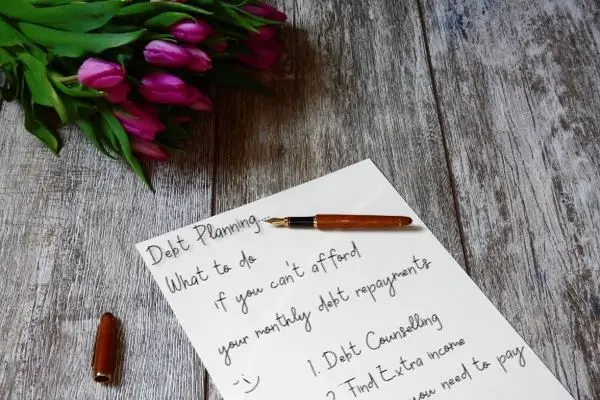
The question one has to ask oneself is which of my debt is good debt or bad debt? Write down all your debts and assets in a list to assess your investments and liabilities. Consider selling or winding up some of the assets that are not generating a recurring income. Buy assets that generate a recurring income.
Property is a tested asset that generates revenue and is a commodity that does not exhaust demand. Other assets that generate revenue should also form part of your investment portfolio. If you have a comprehensive plan to replace all your debt with good income generating credit, you will be able to reap the rewards of a guilt-free, bad-debt splurge.
These may include purchases of a dream car, purchases of holiday homes or private-schooling for kids. All the monthly repayments will come from the extra cash flow one would generate from good debt investments.
We offer our Credit Salvage credit clearance and ITC Clearance services which will increase your credit score. Our Credit Salvage credit clearance services, deal with:
Conclussion - Should I clear all debt with credit clearance?
Contact us today and make use of our credit clearance services, if you want to approach financial institutions to buy a property and increase your good debt portfolio.
Acquiring a loan, home loan and vehicle finance in 2019
You and your family will find yourself in a situation where you need to apply for a loan. It is inevitable. For most consumers, it is a daunting proposition to apply for loan facilities. You might want to apply for credit facilities for applying for the following
Vehicles
Homes
Debt consolidation
School fees
The question is where one will get the finance to finance these purchases. Which loan provider to approach and who will be willing to approve such a loan facility? In this complex financial industry, there are so many options available. It is a competitive market where banks and credit providers will compete to get your business. Thus, understanding how the lending industry operates will be useful before making any loan applications. Below is some of the information that will assist you in getting the best loan facility and the best possible interest rate.
The first thing you need to understand is that you're going to spend a reasonable quantity of time comparing the various credit providers, banks, and their service offerings. The National Credit Act stipulates how these credit providers should act when it comes to assessing and approving loan facilities so most lending institutions will apply the same criteria but not all will have the same product.
If you have a previous financial history with a credit provider, bank, or private lending company that should be the first place you start. The reason you want to do this is that it will make the entire lending method much easier for you if you have had a prior financial history with the lender.
Your credit rating is one important criterion credit providers will look at when approving credit facilities and before applying for any credit it is important you know what your credit score is and if there is room for improvement. If your credit score is exceptionally low and you get blacklisted by credit providers, your options are limited. You may still be able to secure a loan, but you may have to pay a greater interest rate. You can go online to find out about your credit score and ways to increase it. Credit bureau in South Africa will provide you with a free credit report each year.
Another especially important factor is affordability. During the application and assessment process, credit providers and lenders will need your Gross income, net income and living expenses. There are two types of loan facilities available to consumers
Secured loan facilities
Unsecured loan facilities
Unsecured loans are more difficult to get and will have greater interest rates. The loan provider will have more risk of advancing credit without security.
The fact is that a particularly crucial factor gets missed by consumers applying for credit facilities and loans. They shop around for the best interest rates and the best term but fail to consider how much the loan's cost will be over the term of the repayment. When it comes to making the best choice between lenders, this is an important fact to know. Again, if you have a good credit rating, good disposable income, assets, and education it will be easier to get a personal loan at the best possible interest rate.
Once your personal loan application gets submitted, the final stage is to wait and see if your loan application gets approved by the lender. You are now responsible for repaying your loan once approved.
Also, remember to make the monthly payment on time every month. This on-time repayment will ensure your credit score remains great and you can enjoy the new house or vehicle you purchased.
Credit Bureau Clearance
Please visit the following articles to assist with Credit Score or Credit bureau clearance
The number of blacklisted companies in Johannesburg and finding whether the person you are dealing with is blacklisted or not can sometimes help in your dealings with them. Blacklisted companies find it difficult to get credit and this problem extends into any financial service. If you are one of the blacklisted companies in Johannesburg, then a credit company may be able to help you. Credit companies have professionals dealing with issues such as blacklisted companies in Johannesburg.
What does BLACKLISTED and ITC Blacklisted mean?
The most prevalent question consumers ask when they get declined for credit is, am I Blacklisted? These words are still used among South African customers. Blacklisting, blacklisted, or blacklist are false words, a category dating back to when only negative information was kept by the credit bureau. Now the credit bureau will have both favorable and negative information, the combination of which proved useful in anticipating the consumer’s future behavior. Now that the bureau reports on both positive and negative information the term blacklisted is not true
The good news is that there is no blacklist and there is no blacklisting. In this article, we will give you the true reasons why your credit declined.
When applying for any type of credit, the credit bureau TransUnion, XDS, Compuscan and Experian will only report on information about your credit life. Credit providers will have access to this information and they, in turn, will base their decision on this information. The credit bureau will not only show negative information but will also report on valuable information for credit providers to make an informed decision whether to grant or decline credit.
Each Credit provider will have their own set of criteria for approving or declining a credit application. When it comes to approving credit facilities, some businesses are more stringent than others, and some may have more relaxed requirements. Credit providers will have to do affordability assessments and you might get declined with a perfect credit report. The myth of blacklistedor blacklisting is therefore no longer relevant. New credit facilities get declined if you are not able to afford the new credit facilities.
As you can see there is no blacklist out there or you cannot be blacklisted. Such a list does not exist
The major reasons credit application gets declined
Affordability
Not making payments to existing credit applications on time
Low credit score
Having too much credit will impact on affordability
Judgements, default, and debt counselling indicators
We will publish further articles about the above reason in more detail.
Contact us to assist with credit clearance, debt counselling or if you need a copy of your credit report
For more information Request a Call Back or Contact Us
Help me rebuild my Credit score with Credit Clearance and credit bureau Clearance.
Life is so much simpler and easier with a good Credit Score and to have a good credit score you need Credit clearance, ITC clearance or credit bureau clearance. So, you've missed a couple of payments to your credit providers due to unforeseen circumstances, don't worry it happens to everyone at least once in their credit active lifetime. Due to these skipped payments, your credit score took a beating. Now you need to work on Credit clearance and IT clearance as well as improving your credit score. Obtaining any type of credit can be nerve-wracking especially if you skipped a couple of months’ debt repayments. Most consumers worry that they won't qualify for a much-needed loan. Many consumers don't know what they can do to improve their chances of getting that credit card, personal loan or even home loan finance.
Even though you may have produced a plan, implemented a budget, got a much-needed salary increment or got some extra cash to settle these outstanding debts, the sad news is that your credit score would still not show any improvement overnight.
The good news once you’ve committed to settling your debts, the rebuilding of your credit score begins. You will get Credit clearance and ITC clearance and a credit report you can be proud of. Each consumer’s credit score consists of several factors and each credit bureau has its credit score matrix. All registered National Credit Regulated (NCR) credit providers use credit scores as a prediction of how likely consumers will be able to pay back a certain credit agreement. The higher the credit score is, the higher the probability is that the credit applied for will be repaid. A lower credit score will show to the credit providers that the credit applied for will default on.
Increasing Credit Ratings and Credit Scores
Everyone is always aiming to enhance oneself, and why not? Self-improvement is a fantastic thing.
You end up being a much better public speaker and you go to the gym to lose a couple of kilograms. You increase your credit score to give yourself the best opportunity of buying a house or car on credit with low-interest rates.
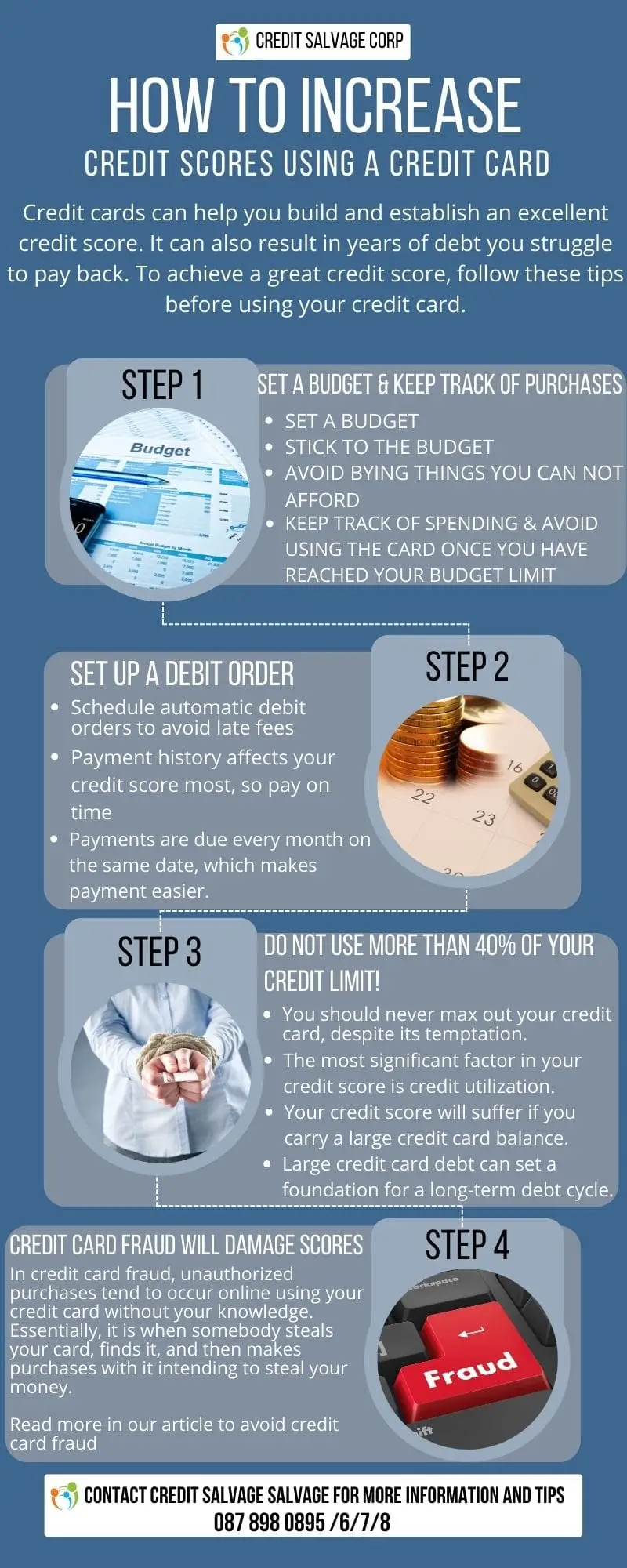
When you apply for a personal loan, a revolving loan facility, houses, or cars your credit rating will make or break you. That is why you must take action to increase your credit score. Below are some ideas to assist you in increasing your credit score. Follow the ideas below and you are on your way to getting credit at will and you will have the power for fantastic money-saving purchases:
Rebuilding your credit score starts with these main factors:
Remove adverse information as soon as possible by using our Credit Salvage credit clearance service.
Always use credit responsibly
Pay your debts on time with the full amount due, as paying even one cent less affects your credit score
Pay off debt as soon as possible
Keep balances low, especially on retail store cards and credit cards with a credit limit. Exceeding these limits affects your credit score
Create a strict budget and a repayment plan to pay off your debt
Remove adverse information as soon as possible using our credit clearance and ITC Clearance services.
Make use of our credit clearance service and increase your credit score with each listing we remove and update.
This is the first step in rebuilding a healthy credit score with ITC clearance and credit bureau clearance.
Thanks to our new online credit clearing application, ITC credit bureau clearance and debt review removals are now simple and easy. All you need to do is click the image below, fill out our online application, and we'll take care of the rest.
Using credit in a responsible manner - Credit bureau clearance:
Credit providers will investigate affordability and will scrutinize your spending behavior and affordability.
You need to show credit providers that you are responsible for your money and that you can afford any new credit. Your repayment behavior to all your debts needs to show that you are responsible with your finances.
Paying your debts on time with the full amount due - credit bureau clearance:
The most convenient method to increase credit scores is to pay your accounts and debt obligations every month and ALWAYS pay on time (not even ONE day LATE). Prevent overdue payments at all costs. Paying late, not paying, and short payments have the biggest negative impact on your credit score
Showing that you are at minimal risk starts with your financial behavior and how you approach your current debt. ITC clearance or credit clearance cannot happen if you don’t pay your debts on time with the full payable amount due. Paying even one cent less will affect your credit score. Stop orders, Naedo and Aedo debit orders are simple ways to ensure you don’t skip any payments. Ensure these debit orders get paid each month or you will start having a bad record with your bank. Paying your creditors on time will ensure your ITC clearance and credit clearance will be easy to do.
If you find yourself in a demanding situation and you realize you cannot afford your debt, make arrangements as soon as possible. Having no plan and not addressing the issue will result in drastic consequences to your credit score and future credit applications. Credit clearance and ITC clearance will be harder to achieve. Contact us for our Credit Salvage Debt Counselling and Debt Review services. This will stop your credit score from taking a beating while you struggle with debt. We also offer ITC clearance and credit clearance services.
Paying off debt as soon as possible
If you receive a 13th cheque it is advisable to use as much of this extra money to pay off existing debt.
For consumers who are in debt and cannot escape without help, please do not hesitate to contact us for our Credit Salvage Debt Counselling and Debt Review services. We will produce an aggressive strategy and solution to get you out of debt. We will negotiate a single manageable repayment instalment with reduced interest rates. This is the best way to start working on improving your credit score and ITC clearance. Sticking to plan, staying motivated and committed to settling debts will ensure credit bureau clearance.
Inspect your credit reports with all the credit bureaus at least once or twice a year.
The info in your credit report forms the basis of your credit history. If your credit rating is low the question, why you always get declined credit lies in your credit report
Any mistake in your credit report will show itself in your record as a low credit rating. That's why it is recommended that you examine your credit report once or twice a year.
Develop and maintain credit scores with time.
Rome wasn't built in a day. To increase and maintain your credit score, time and history are vital components. Having a long credit report with a good record of accomplishment of well-maintained accounts will affect your credit score. Not having a long credit history will suggest you are a riskier consumer. Accounts to avoid one-month loans, payday loans and pawn transactions.
Debt Counselling and Debt Review
Debt Counselling and Debt Review are great and smart solutions if you find yourself with too many debt instalments to pay each month. This service is an alternative to increasing credit score and ITC clearance with credit clearance. Debt counselling and Debt Reviews process include the debt counsellor to renegotiate reduced instalments with all your credit providers. Reducing interest rates forms part of the process. A reduced monthly instalment will ensure you will have enough money for living expenses, school fees and unexpected life disasters which will crop up from time to time.
How long will it take for me to rebuild my credit score?
Payment profiles held by the credit bureaus like TransUnion, Experian, XDS, Compuscan, as well as other smaller Credit Bureaus, stay on your credit report/credit profile for 2 years. You can improve your credit score before those payment profiles get deleted from your credit report/credit profile. The older those payment profiles get; the less adverse information will hurt your credit score. Especially if those delinquent accounts got settled and updated. The amount of time it takes for your credit score to start improving will depend on the factors mentioned above but the credit score will improve. It is wise to keep at least one of your credit agreements open. Pay the account due every month with no skipped payments. Not skipping any payments will assist in increasing your credit score points and will ensure that the goal of credit bureau clearance is achieved.
Seeing an improvement in your credit score rating can start anywhere between four to six months. Consumers with a lot of credit agreements that are in default will find it harder to increase the credit score and it will take a bit longer. ITC clearance with credit bureau clearance will take the same amount of time. To ensure you don't find yourself in a situation where you try and improve a credit score rating before entering into high credit purchases or agreements like home loans and vehicle finance, it is advisable to apply for debt counselling as soon as you feel you are struggling or unable to meet your monthly commitments. Our Debt Counselling, Credit Clearance and ITC credit bureau clearance services will ensure you are not left feeling imprisoned by debt.
Contact us today to find out how we can assist in freeing you from your debt with our specialized services at Credit Salvage Corporation SA
Get Debt Help today!
We now offer an easy online application for credit clearance, ITC credit bureau clearance and debt review removals. Just click the image below, complete our online application, and we'll take care of the rest.
What does it mean if you are blacklisted? In general, when you are blacklisted, you are ostracized from certain groups, and you have certain privileges taken away from you. This translates in the financial world, so if you are financially blacklisted means your credit is frozen, you are unable to get a credit of any kind.
The various Credit Bureaus in South Africa will report to credit providers if you have defaulted on any accounts. As Blacklisting is a frequently used term in South Africa, we want to make it clear that there is NO register or a list of names of people who have been blacklisted.
Now there are about twenty-five million people who have defaulted on their credit agreements and consumers who have defaulted on their credit agreements believe that they are now blacklisted in South Africa. In short, it means that you have been listed by the credit bureaus as someone who struggled or is currently struggling to repay your debt. You have shown over a consistent period that you aren’t able to repay your debts.
You won’t be able to apply for any other form of debt in South Africa. Lenders will search your record when you apply and realize that you are blacklisted. Lenders don’t usually offer loans to people who are blacklisted. But that isn’t the only thing it affects.
Not sure whether you have been blacklisted or not? Contact us today, and we will do a complete investigation into your bureau profile.
Is ITC Blacklisting Legal and what is a Credit Bureau?
In our other article named Blacklisting, there is no blacklist file, or a consumer is not blacklisted. The term blacklisting implies that you have adverse information on your credit report at the various Credit Bureaus in South AfricaCredit Bureaus in South Africa. These adverse can be in the form of the following listings
Overdue payment collections
Judgment information
Debt counselling indicators
Defaults
Trace alerts
This adverse information will affect your capacity to get new credit, loans, home loans, vehicle finance or open retail accounts. This adverse behavior towards your current credit obligations gets viewed by the credit provider and gets assessed in your ability to repay any new loan.
Credit bureaus are organizations that maintain a record of your credit information. Your credit record demonstrates how you will handle your debt obligations. Credit providers will use your credit report to decide whether you can afford new credit.
The National Credit Act requires that each credit bureau gets registered with the NCR. The NCR is a watchdog who decides how your personal information on the credit bureau gets used.
As there is no blacklisting file out there the credit bureau has an obligation to document all good and bad information for credit providers to make informed decisions.
If there is no blacklisting or blacklisted, then what is the role of a Credit Bureau?
Credit Bureaus are organizations that gather credit histories, document it, and keep track. Credit bureaus play a significant role in assisting companies and banks to decide whether a consumer applying for credit, or a loan is going to be able to pay back the cash they borrow.
In South Africa, the main Credit bureau are
Compuscan
Experian
XDS
TransUnion
What are Your rights regarding a Credit Bureau?
To get a copy of your credit report when requested.
You are entitled to Confidentiality
One free credit reports a year
You have the right to challenge any information held at the bureau