Consumers are becoming more dependent on credit to survive
South Africans are using more credit to help make ends meet. The TransUnion Q1 2019 South Africa Industry Insights Report shows that outstanding balances across all major credit categories have increased. This is when compared to the same time a year ago.
The TransUnion South Africa Industry Insights Report (IIR) is an in-depth quarterly research report. It analyses all the country’s active credit files to provide a snapshot of how consumers are making use of and servicing their credit. It measures credit originations (new accounts opened), balances (outstanding total and average lending balances) and delinquencies (accounts in payment arrears) across secured (e.g., home and vehicle loans) and unsecured (credit cards and bank and non-bank loans) credit.
South Africans’ credit card balances, bank, and non-bank personal loans (which gets used to fund household expenses) and smaller ticket purchases, grew – by 6.6%, 7.2% and 11.4%. Also, more credit card accounts, and bank and non-bank personal loans were opened in the last year. These increased borrowing levels are likely to be the current challenging economic conditions. Consumers are relying more on credit to supplement their incomes to meet their day-to-day financial obligations.
The growth in outstanding balances and new loans across secured credit products like home finance and vehicle purchases was exceptionally low - under 3% compared to last year. These numbers may be a sign that consumers are deferring these big-ticket purchases in the face of economic uncertainty.
Delinquencies (accounts in payment arrears) on secured products like home and vehicle loans rose for the third consecutive quarter. Despite this, the delinquency rates for secured products (home & vehicle loans) tend to be far lower than those of unsecured products like personal loans and credit cards. Particularly given that lenders focus much of their originations on lower-risk consumers. Even so, the steady rise in delinquencies for secured products over the past year indicates that even consumers in the lower-risk credit tiers are not immune to the current economic challenges.
Credit cards bucked the delinquency trend, with serious non-payment rates improving year-on-year in Q1, dropping. This may be due to consumers protecting their credit cards in the face of economic uncertainty, to maintain access to their most liquid form of credit.
The size of the economy shrinking caught many by surprise, but the weaknesses in other areas like unemployment and wage growth, have been putting pressure on consumers’ personal finances for some time. Inflation is still well above average wage growth. Real household income continues to fall. In these tough economic times, credit can be a critical lifeline for consumers who may be struggling with their expenses. It’s important for lenders to continue to make credit available to consumers who may need it. It is important that they are making prudent lending decisions, helping save consumers from finding themselves over-indebted. But it is also important for consumers to honor payment commitments to creditors, so they have access to much-needed credit during tough times.
President Cyril Ramaphosa has signed the controversial National Credit Amendment Bill into law.
Informally known as the ‘debt relief bill’, the new act aims to provide relief to over-indebted South Africans who have no other means of extracting themselves from over-indebtedness.
Specifically, the act will allow certain applicants to have their debt suspended in part or in full for up to 24 months.
This debt may then be extinguished altogether if the financial circumstances of the applicant do not improve.
The criteria for meeting this debt write-off include:
Where the unsecured debt is not more than R50,000.
Where the unsecured debt was accrued through unsecured credit agreements, unsecured short term credit transactions or unsecured credit facilities only.
Where the person earned no more than R7,500 a month over the last six months.
The bill also introduces several new offences related to debt intervention.
Under the bill, it will now be an offence for a person who intentionally submits false information related to debt intervention.
Any person who intentionally alters his or her financial circumstances, or persons who intentionally alter their joint financial circumstances, to qualify for debt intervention, will also be guilty of an offence.
It was not made clear in the parliamentary announcement when the new will come into effect or whether it will apply retrospectively.
Concerns
South Africa’s banking industry has previously raised concerns with the bill after it proposed writing off billions of rands worth of debt from every-day South Africans.
The Banking Association of South Africa (Basa) made it clear that it does not support the principle of debt forgiveness – for obvious financial reasons, but also for what it would do to the lending and credit industry.
Aside from the costs banks would incur writing off the debt, the reaction from banks would be to make lending conditions much tighter which would make it more difficult for the poor to secure credit, Basa said,
The figure on how much the bill would cost local lenders has not been nailed down, but according to Intellidex analyst, Peter Attard Montalto, the bill could force losses at local banks in the region of R25 billion.
“This bill is of grave concern to the banking sector and could, through the imposition of a new income-based personal insolvency and debt affordability regime, force losses on the banking sector of around R25 billion,” he said.
What to do before considering a debt counselling process
If you're behind on payments and always short on cash every month, you should act with a quick and decisive goal to reduce the damage of accumulating debt you cannot afford. Our debt counselling program is designed to assist swiftly in dealing with these debts you cannot afford. In this article, we will discuss what you can do if you're unable to afford your debts.
Credit Salvage Corporation is here to assist you in every feasible way with Debt Counselling and/or Credit Clearance and ITC clearance. Below is an article we have included for your perusal which will support and guide you.
Not being able to afford to pay your creditors for your debts is to a great degree a scary prospect, but it’s something that can happen to anyone. Whether you’ve taken on too much debt, have experienced a sudden decline in income or have experienced retrenchment, there may come a time when you don’t have the relevant cash flow you need to pay all your creditors and debt. Here at Credit Salvage Corporation, we have seen these situations happen too often to our new, existing, and recurring clients.
If this happens to you, it is important you react in a positive and quick attitude to try and mitigate the damage to your credit status. Acting with a positive and quick attitude will ensure your current and future financial life does not get affected.
At Credit Salvage Corporation we assist our clients with Credit Clearance and Debt Counselling Services, but before we get more into our services and to help you get started, here are the steps you can take before making use of Credit Salvage Corporation credit clearance anddebt counselling services.
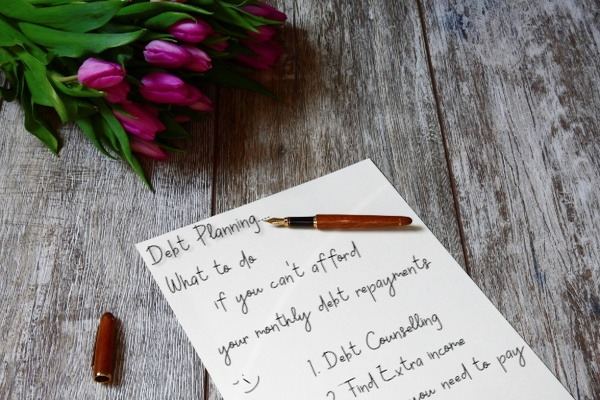
Try to find the cash needed to pay your creditors
It may seem obvious, but if you can’t make your monthly payments the first thing you should try to do is to free up enough money to get your expenses and creditors paid. This approach is the only sure way to avoid late fees, potential damage to your credit score, as well as other consequences like legal fees.
Finding extra part-time employment to bring in more income is another solution, selling non-essential items you have around the house will also free extra cash. These may be short-term solutions unless you have the time to keep up your part-time employment until you’ve paid off some of your debt obligations and brought them down to a more manageable level. These solutions can at least buy you time some to put other plans in motion in dealing with your debt and to clear the debt.
Budgeting is important. Take the time to set up and plan a comprehensive budget if you don’t currently have one. Take control of monthly expenditure – you’ll find it surprising how much money you can save to cover living expenses and debt.
Unfortunately, in most situations finding the money to settle some of your debt obligations is impossible. If that’s the situation you find yourself in, you’ll need to consider our debt counselling services under the trade name (Credit Salvage Debt Counselling Services). We will set up a realistic budget to cover all your living expenses and we will propose an affordable repayment plan to your creditors with reduced interest rates.
Focus on the accounts you need to pay for
When paying all your creditors is impossible, determine which debts you’re going to make sure you pay on time so you can put your money towards these accounts first.
For most people, it makes sense to pay back secured credit before unsecured credit. This means that your first available money should go towards covering your home loan and vehicle finance. If you don’t pay these accounts, you put yourself at risk of losing your house to foreclosure or your car to repossession. Either foreclosure or repossession will do serious long-term damage to every aspect of your life, and both must be avoided at all costs. Under our debt counselling program, we will ensure your house and vehicle remains safe at all costs. These valuable assets get protection under the National Credit Act when one applies for debt counselling.
See if debt consolidation is an option
If you haven’t missed any monthly payments and your credit profile and your credit score is good, debt consolidation is an option for you where you combine all your debt into one payment.
If you have tried debt consolidation before and got declined due to affordability or a poor credit score, your only other option would be debt counselling. Debt counselling is like debt consolidation – the only difference is that debt consolidation works with money (see our explanation about debt consolidation in the next paragraph) and debt counselling is a restructured repayment plan to all your creditors with reduced interest rates. Under the debt counselling program, you will only make one affordable payment to all your creditors.
When you consolidate your existing debt, you secure one new loan and use that loan to repay as many of your current debts as possible. Under debt consolidation, you will have a single loan repayment which usually ensures you have a reduced commitment to credit providers. Debt consolidation is exceedingly difficult to get without a perfect credit score and you will have to prove that you will be able to afford the loan.
You could also look for a consolidation using your existing home loan; this option always has a longer repayment timeline at a much lower interest rate but the cost to repay these debts under your home loan will be more expensive eventually. This option is definitely a viable solution especially when it makes your debt repayments more affordable.
Contact your creditors as soon as possible and let them know about your financial predicament and that you need debt help. If you are struggling to pay your debts and there are a couple of credit providers you know won’t be getting a payment for a particular month, contact the creditor as soon as possible and tell them that you are not going to be able to pay the money due.
If you can’t escape your financial problems by settling your debt, insolvency is your last option. Do not contemplate insolvency before considering our Credit Salvage Debt Review program. Under our program, we will ensure you don’t get declared insolvent and all your assets will remain safe at all costs. These valuable assets get protection under the National Credit Act when a consumer applies for our debt counselling program.
Please bear in mind that Insolvency or sequestration have serious long-term consequences and damage your credit score for an exceptionally long time.
The important thing is to act and clear debt as soon as possible!
If you cannot pay your accounts each month or won’t be able to pay your accounts in the future, it is imperative you take swift aggressive action.
Get debt help today if you are finding the whole situation too much to handle
Credit Salvage Corporation provides the following services which will offset any problem you face:
There is a way to get on top of your repayments and credit that is by consolidating debt. There are credit companies that will help you in the consolidation of your debt, by offering you a loan to repay all of your debts in one go by means of consolidation and then paying off one loan. Your financial consultant will usually look out for a loan that has relatively small repayments so you can get on top of your debt with cash to live with. Consolidation of debt is a common way for people to sort out their finances and usually the easiest way too. Consolidation debt may not be for you if you have consolidated your debts a number of times in the past. Your consolidation debt includes the debt from your previous consolidation or is you want to move debt off your credit cards and store cards to start using them again.
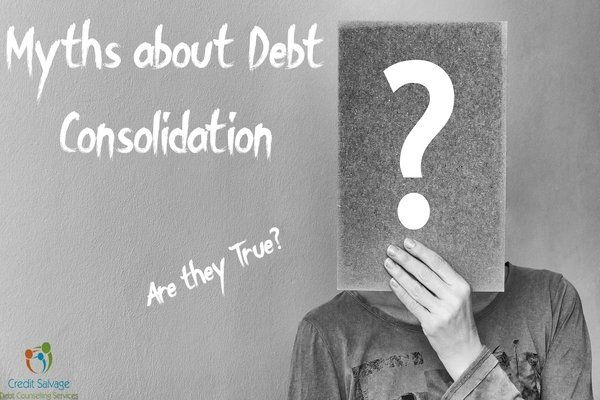
Myths about Debt Consolidation
If your debt is impacting your finances, you may fall under the 75% of households that spend 72% of their available disposable income on debt repayments. This is according to the South African Reserve Bank bulletin. This is a troubling statistic where consumers contribute 60% to the economy.
Applying for a debt consolidation loan is one of the most sought-after products these days and the purpose of this loan is to consolidate all debts. This is a well-known process which makes things so much easier in your life by consolidating many credit agreements into one manageable instalment and may assist you to get out of the dreaded ‘Debt Trap’ much quicker.
In South Africa and around the world there are certain misconceptions about using a loan to pay for your current debt. We all heard the famous saying – “Don’t use a loan to pay off another loan as it will get you deeper into debt”.
We will discuss the common myths about debt consolidation and ideas on how they work.
Myth: Debt consolidation decreases debt
In most cases, debt consolidation does not reduce debt. What it does is relieve your monthly debt repayments to creditors and relieves the pressure of using an average of 72% of your disposable income on your debt.
Myth: With a debt consolidation facility you will save on interest
If you have an excellent credit score you might qualify for a consolidation loan at a very low-interest rate, but this is not the case in most instances.
So let’s look at a simple example –
The interest rate on one of your credit cards will be around 20.25%. On the very same credit card, your outstanding balance is R1 000. If you don’t spend money on the credit card your monthly repayment will be about R176.65 per month.
If you consolidate and include the above-mentioned credit card into a debt consolidation loan with a typical 5-year repayment period at 27.75%, your new monthly payment gets reduced to R105 per month, which is a reduction of R71.65 per month. Your total repayment on the credit card increases over the specified period due to increased interest rate and an extended repayment period.
The monthly repayments are significantly lower, which will improve your monthly affordability. Getting this type of benefit you will pay extra in the long run with a more expensive credit card, for example.
Myth: It will hurt your Credit Score
As you will be increasing your monthly disposable income and you will be settling all your current debts, your credit score will increase with each account that gets settled through the debt consolidation. Read more about credit scores
Myth: Debt consolidation is an expensive loan
Normal debt consolidation will attract an interest rate of between 10.25% and 27.75% per year. The interest rates credit providers will offer vary according to your credit score. The higher your credit score is the lower the interest rate you will receive. If you are a high-risk consumer with a low credit score, then you will receive an offer of 27.75% or the loan might even get declined. Myth:
Myth: The process of applying for a Debt consolidation loan is tedious
With all the technological advances in the past 10 years, credit providers have made the process of applying for debt consolidation quick and easy with a simple online application or you may even apply via your cell phone. These call centers will have voice recordings which will act as a legal binding credit application.
Once you have sent in all the necessary supporting documents the entire process may take between a couple of days to a week to finalize. Debt consolidation using your fixed assets as security, like your house, for example, takes much longer but the interest rate will be far less. Preparing all the relevant documents required before applying for the debt consolidation loan will speed the entire process up. Documents usually needed for a debt consolidation loan application are Pay slips, Identity Documents, bank statements and proof of residence.
Our service
Before applying for a debt consolidation product let us improve your credit scores with our Credit SalvageCredit Clearance product. If you get declined due to affordability our Credit Salvage Debt Counselling and Debt Review products will be the answer to getting you out of debt.
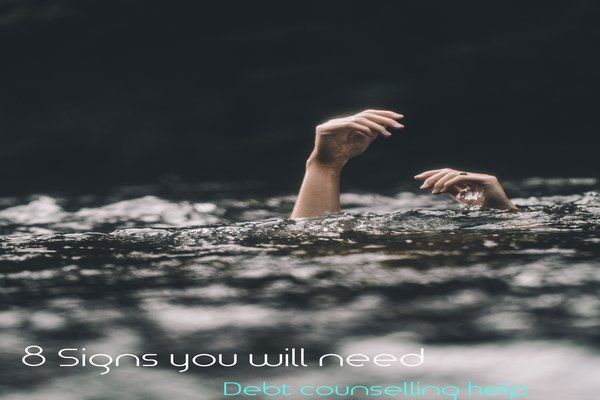
8 Signs You Need Debt counselling/ Debt review - 2019
Sometimes life begins to spin out of control and it's hard for you to keep up. Things that once seemed insignificant suddenly upset you and you snap at others even if they didn't do anything wrong. This could be due to your debt.
Have you ever considered debt counselling to deal with spiraling debt? According to the South African Reserve Bank (SARB) Quarterly Bulletin, March 2019, South African household debt rose in October to December 2018.
If you are experiencing one or more of the following signs you need to consider that you will need our debt counselling or debt review help.
You’re falling behind on debt payments:
Sometimes circumstances happen, which can lead to your debt repayments to creditors falling behind. An unexpected retrenchment at work, Salary cuts, an emergency or a divorce are just some of the problems that could lead to missed payments to your creditors.
The first sign of you needing help with your debt is when you are behind on your repayments to creditors. Not taking immediate action to remedy the situation will cause serious harm to your credit bureau score and report.
Credit Salvage will be there every step of the way with our debt counselling and debt review services.
Living from payday to payday
The saying living from payday to payday means it is a lifestyle in which a consumer is unable to save any money due to their debt obligations. Once you get to a point where you’re living from payday to payday, this is a sign that you are in trouble.
Unfortunately, currently many South African consumers are finding themselves in this nasty predicament. Waiting for your next payday is a prevalent element of the average South African consumer before they even reach the end of the month. As debt payments, food, transport costs, Eskom Electricity and living costs rise, it becomes increasingly difficult for households at the end of each month to have any disposable cash left.
Overspending
Some consumers will react when they feel stressed by spending even more money they don’t have. Credit cards are a means to ease the discomfort caused by insufficient funds to satisfy needs. Credit/ payday loans and credit cards can help you to forget about your financial difficulties by postponing the adverse economic effect and giving a mistaken feeling of economic safety. The sad news is that the payday loan and /or credit card account will eventually lead to debt/ unmanageable debt.
Other reasons consumers overspend and fall into debt
Impulsive buying habits
Spending without a Budget
Frequent Use of Credit cards and store cards
You can't afford your living expenses without using a credit card or loan.
One of the tell-tale signs that you need debt counselling is when you have no other choice but to buy your monthly groceries on credit. According to the latest Old Mutual Savings and Investment Monitor, 30% of South Africans are unfortunately buying their Groceries on credit. Read the full article by clicking the attached link (Source Old Mutual)
Credit is normally used to buy large ticket items like appliances, vehicles etc. and for emergencies. Credit is not an ideal solution to finance daily expenses like groceries and fuel. You will easily fall into the debt trap by using credit for everyday necessities.
This indicates that you do not have enough money to support your current lifestyle. The income you earned might not be enough to service all account payments or it could be that your finances may have been mishandled, which created this over-indebted scenario. It is only a matter of time before things spiral out of control. To avoid this unhealthy scenario, it is imperative you take action to avoid any further damage to your credit profile and credit score.
You need debt review if you are hiding your debt from your spouse.
A sign that you have too much debt that you can’t handle is when you try hiding debt from your spouse. This is a sign that things are wrong, or things will become much harder in the next few months. If you don't open your monthly statements from your creditors because you don't want to look at your balance or you're going out of your way to keep your spouse from finding out about your debt.
To escape the pressure of your debt, you switch to drugs and/ or alcohol.
To avoid facing their debts, many people use drugs and alcohol to ease the pressures of being in debt. The higher drug and alcohol costs may even have led to these consumers being drowned deeper into debt. Getting our debt counselling help and our substance abuse referral program will be one of the first measures you need to take if you're going to get out of debt for good.
Unable to save money due to repayments to creditors:
If you are unable to save every month because your debt repayments are too much, then it is a sign that it will be time to call for help.
You need debt review if your debt is haunting you at night:
Are you getting scared or uncomfortable thinking about your debts? These financial worries and financial stress is keeping you up at night. This unhealthy stress will eat into your subconscious, which will be the cause of you being unable to sleep and to perform optimally during work hours.
Debt and especially unmanageable debt have a bad habit of placing stress, anxiety and even depression in its victims, who can, in turn, lead to problems with sleep. Sleepless nights caused by your debt worries might even interfere with the quality time you spend with your family.
These are the 8 signs we have identified over the years to look out for when you need to consider debt counselling or debt review. Get in contact as soon as possible once you experience any of the above. Credit salvage will help you alleviate all the above symptoms with our trusted debt counselling and debt review services.